May 20, 2026 • Jeremy Mironov • 3 min reading time
How a Better Website Helps Local Service Businesses Get More Leads
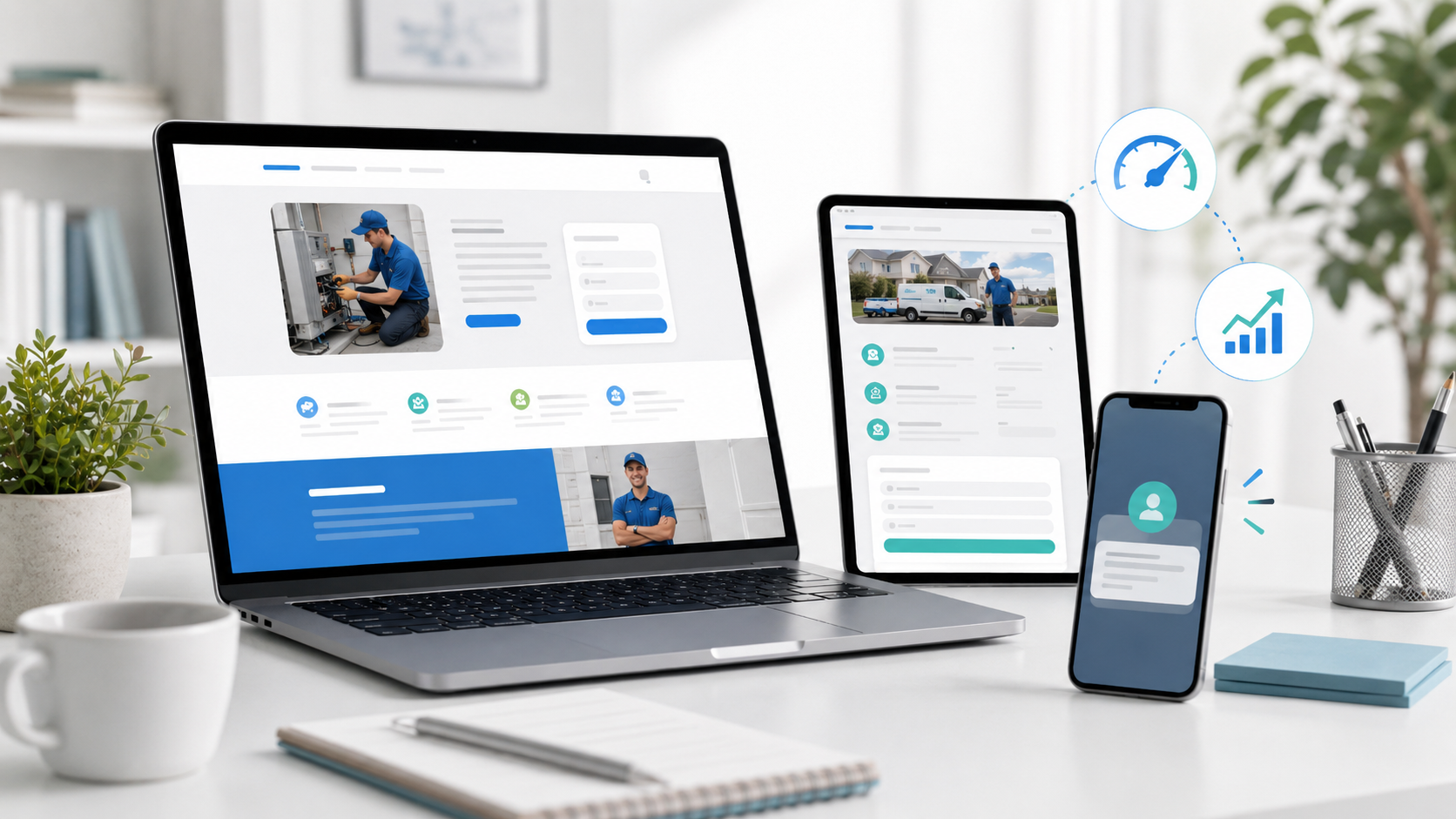
How a Better Website Helps Local Service Businesses Get More Leads
A lot of local service businesses think the main goal of a website is to look professional. And while that matters, it is only part of the picture. The deeper goal is to turn website visitors into actual leads — phone calls, form submissions, and quote requests.
Here is a look at the specific factors that affect how many leads a local business website generates.
1. Clear Service Pages
One of the most common website problems I see is that all services are listed on a single page with minimal detail. This creates two problems:
- Google cannot understand what specific services you offer, which limits rankings
- Visitors cannot quickly find the specific service they need, which increases the likelihood they leave
A better approach is separate pages for each service you offer. Each page should explain what the service includes, who it is for, and how to contact you. This structure also makes it easier to rank for specific search terms like “[your service] Vancouver WA” instead of just a generic category.
2. Mobile-Friendly Design
Most local searches happen on phones. When someone searches for your service on their phone while deciding who to hire, they are almost certainly on a mobile device.
If your website is hard to navigate on mobile — small text, buttons that are too close together, forms that are difficult to fill out — you are losing leads to competitors with better mobile experiences.
3. Clear Calls to Action
Many local business websites bury their contact information or only show it on the contact page. A better approach puts your phone number, a click-to-call button, and a contact form where visitors can see them on every page.
A visitor who is interested in your services should not have to search for how to contact you.
4. Fast Load Speed
A slow website loses visitors before they even see your content. Google’s research consistently shows that each additional second of load time significantly increases bounce rate — especially on mobile.
A fast website also ranks better in Google search results. Page speed is one of the factors Google uses to determine rankings.
5. Local SEO Structure
Even the best-looking website will not generate leads if people cannot find it. Basic local SEO structure includes:
- Title tags and meta descriptions that include your service and location
- Schema markup that tells Google your business type, address, and phone number
- Service area pages for the cities and neighborhoods you work in
- A properly configured Google Business Profile
6. Tracking
You cannot improve what you cannot measure. Without conversion tracking, you do not know which pages are driving calls, which services get the most interest, or where visitors are leaving your site.
A properly configured website includes tracking for phone clicks, form submissions, and other valuable actions — so you can make informed decisions about what to improve.
If you want to talk through your current website and what could be improved, book a free consultation. I work with local service businesses in Vancouver WA and the Portland Metro area.